Best Site Reliability Engineering (SRE) Tool for Incident Response in 2026

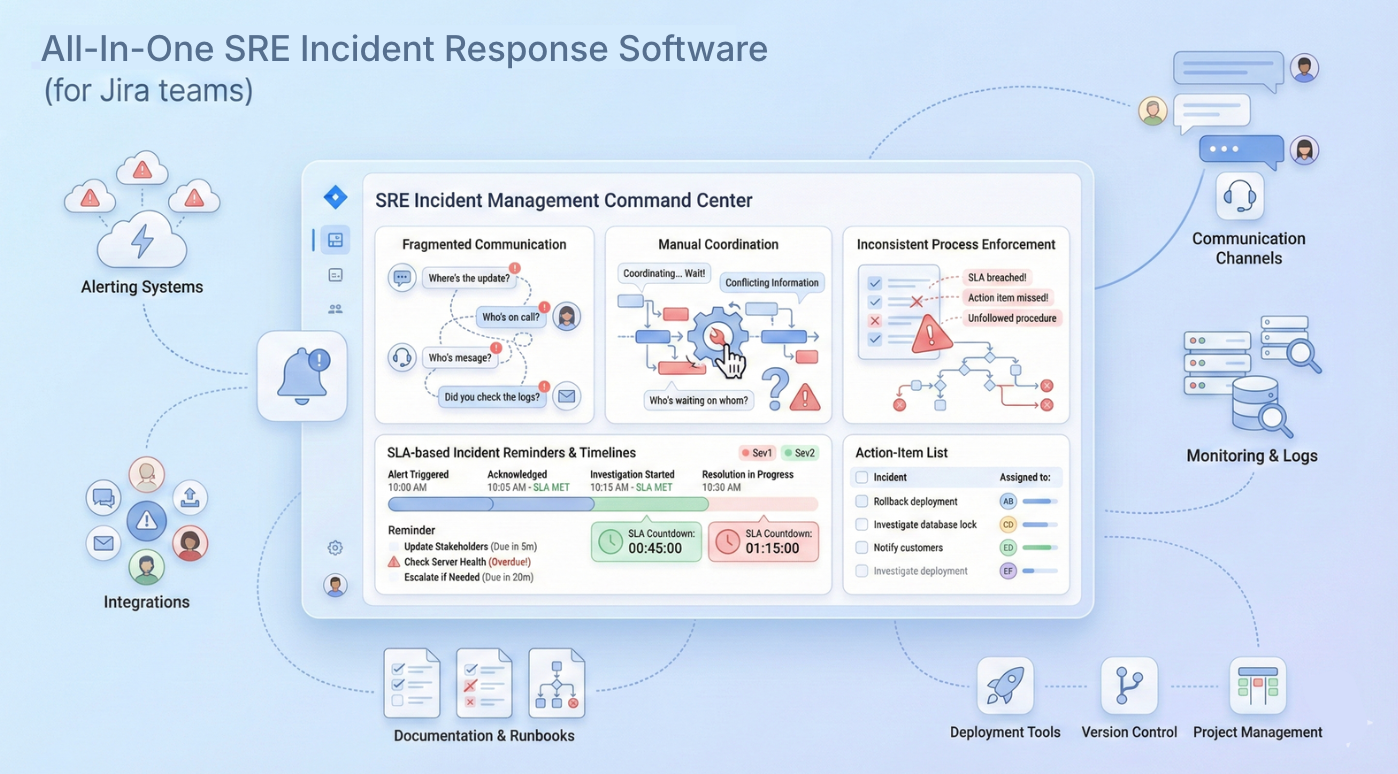
SRE teams use incident response software to keep systems stable as their infrastructure grows more complex. Yet many organizations still struggle with fragmented communication, inconsistent processes, and manual coordination during critical incidents.
This article breaks down what SRE teams truly need from modern incident response platforms, how today’s best SRE incident management tools support end-to-end workflows, and why solutions embedded directly inside existing ecosystems where teams work, like Slack and Jira, offer a uniquely efficient approach to reliability operations.
Why SRE Teams Need a Purpose-Built Incident Tool
SRE teams focus on reducing downtime, improving system reliability, and keeping operations predictable. However, during actual outages, teams are often overwhelmed by procedural tasks: updating stakeholders, documenting timelines, coordinating responders, and capturing meaningful lessons afterwards.
Common Pain Points in SRE Incident Management
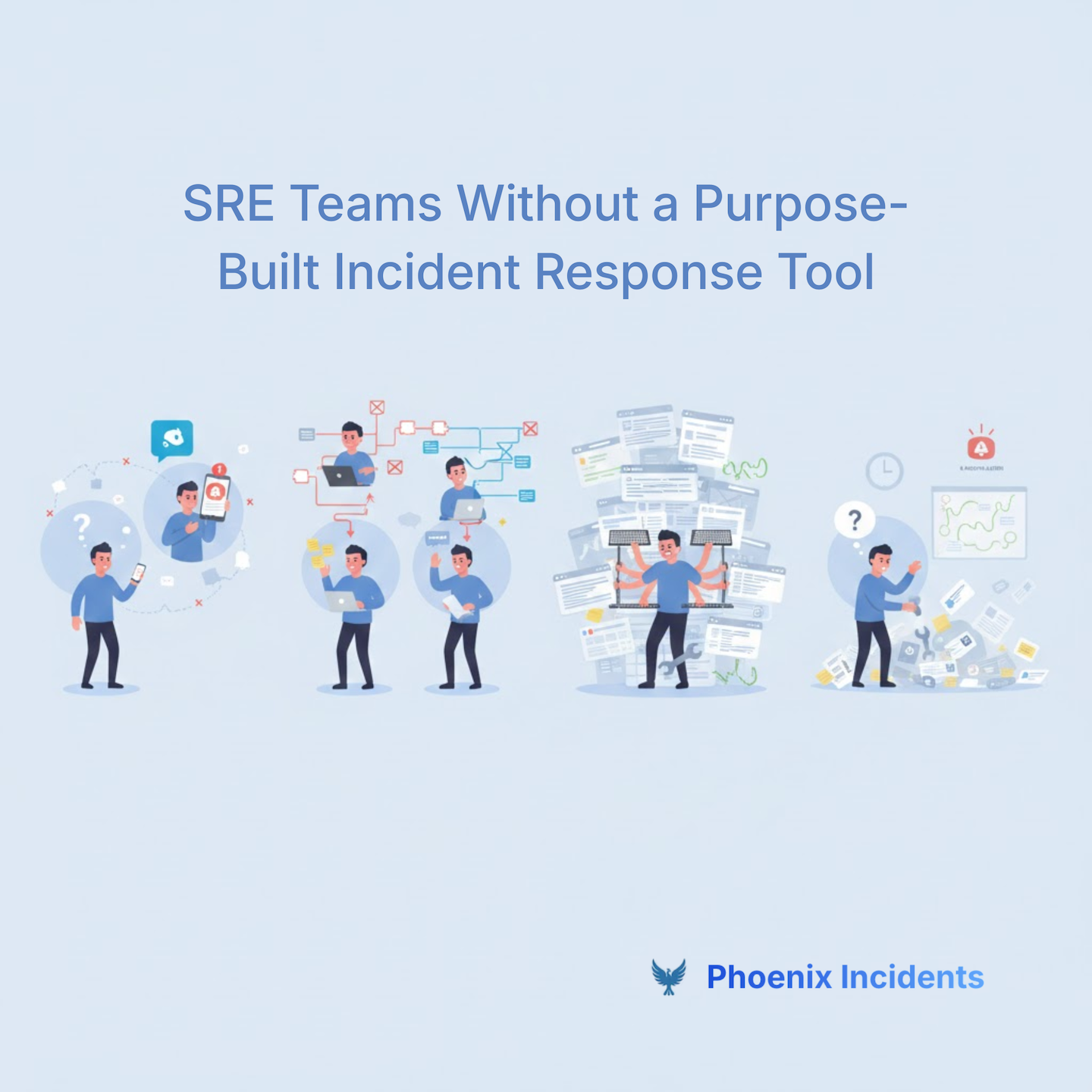
- Fragmented communication: An engineer sees a Slack alert, another opens a Jira ticket, and a third gets paged, but no one knows what the others are doing or what's already been tried.
- Inconsistent process enforcement: Every engineer handles incidents differently, making post-incident analysis uneven.
- Manual overhead: SREs spend more time writing status updates, pinging the right people, and keeping stakeholders in the loop than they do actually fixing the problem.
- Lost knowledge after incidents: When an incident ends, the story of what happened lives in scattered threads and emails, half-finished Jira comments, and engineers' memories. Six months later, when a similar issue surfaces, your team has to start from scratch because no one can find the context or lessons from last time.
What A Good SRE Incident Response Software Should Deliver
An efficient SRE incident response platform supports the complete lifecycle from incident declaration through coordinated response to post-incident learning.
- Workflow Coordination: SREs that work in Slack and Jira need incident response tooling that lives where they work, supports real-time Slack channel orchestration, unified Jira incident records, and synced status updates with paging tools (PagerDuty, VictorOps & OpsGenie) so engineers don’t have to jump between systems.
- SLA-Aligned Reminders and Governance: Reminders must align with the SLA, not the other way around. This ensures consistency during the chaos of live incidents and keeps all stakeholders informed.
- Post-Incident Review (PIR) Capabilities: A complete SRE workflow includes structured reflection, guided PIR prompts, automated timeline building, and thematic root-cause tags, action items tracked and followed up through Slack reminders. When post-incident analysis is handled within existing tools, teams avoid losing context or skipping essential steps.
How Phoenix Incidents Supports SRE Workflows End to End
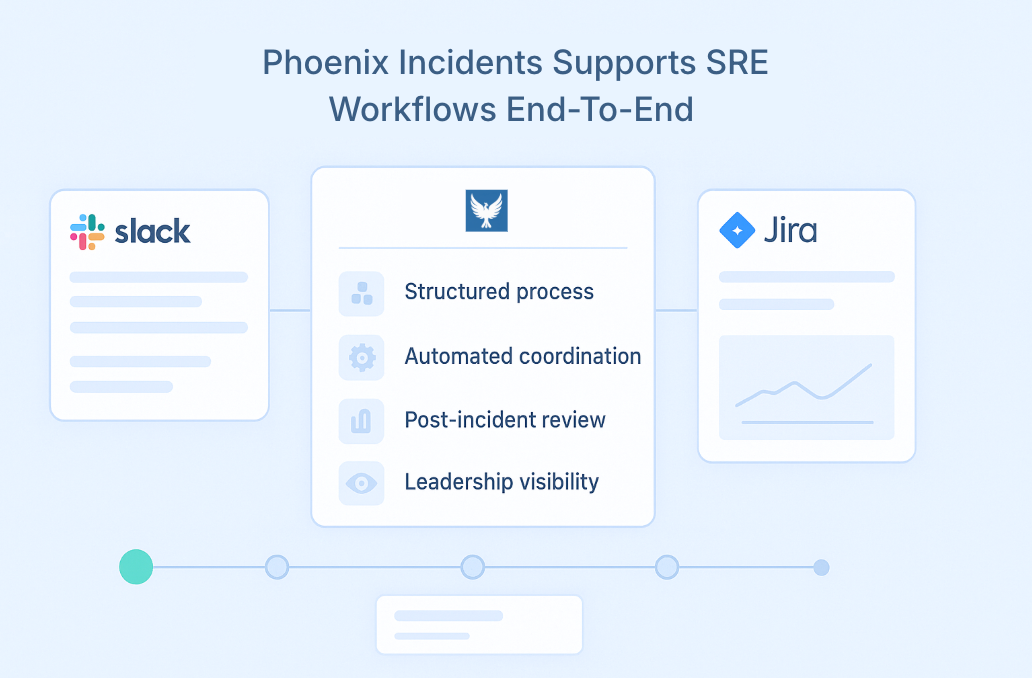
Phoenix Incidents is designed specifically for organizations that use Jira and Slack. It is not a standalone interface that teams need to learn separately from the tools they already use. It also integrates with paging tools, so SREs don’t need to juggle additional tools.
Below is how Phoenix Incidents gives SRE teams a simpler, more governed, less chaotic incident response process:
- Frictionless human-initiated incident creation: Engineers can declare incidents directly from Slack or Jira without leaving their workflow. The incident is created as a Jira issue immediately, with minimal friction, and no separate tools to open.
- Real-time Slack coordination: Once an incident is created, Phoenix Incidents sets up a dedicated Slack channel where responders coordinate in real-time. Interactive controls let engineers manage the incident, send updates, and acknowledge status changes, all from Slack. Automatic reminders keep the team on track during critical steps like acknowledgment and update cadence.
- Centralized Jira synchronization: Every incident and RCA live in Jira as first-class citizens. Phoenix Incidents syncs with external paging systems (such as PagerDuty, Splunk and OpsGenie), so acknowledgments and state changes in the paging tool automatically update in Jira and Slack. This creates a single source of truth with shared context and unified history.
- PIR with guided learning, not guesswork: Phoenix Incidents has Jira-native PIR module that works better than Confluence templates with a fully guided RCA process. Engineers follow a structured process that captures root causes, contributing factors, and remediation steps automatically created and linked in the relevant Jira projects/spaces. No more inconsistent data or answers in templates. This ensures consistent, reliable and thorough post-incident reviews every time.
- Reporting for SRE leadership: Phoenix Incidents provides in-Jira analytics that track incident trends by severity, product/service, and root cause. Leadership gets executive snapshots showing MTTA, MTTR, action-item SLAs (overdue, due soon, completed), and remediation carry-through, all without leaving Jira.
How to Choose the Best Tools for SRE Incident Workflows
When selecting the best tools for SRE incident workflows, focus on tools that:
- Operate directly inside your communication and project management systems.
- Standardize your process with just enough opinionated structure.
- Reduce manual coordination.
- Support learning-focused PIRs.
- Provide leadership-level visibility.
Phoenix Incidents fits these criteria by anchoring your entire incident ecosystem inside tools your team already uses every day.
The Future of SRE Incident Response Software
SRE practices continue to evolve, but the direction is clear: SRE teams want less tool sprawl, more consistent processes, and fewer manual steps without leaving the platforms where they work. Phoenix Incidents represents this next generation of fully embedded incident management that helps teams move toward:
- Lower overhead.
- More unified workflows.
- More predictable operations.
- Stronger accountability through PIR action items.
Conclusion
For SRE organizations tired of tool sprawl and manual overhead, it offers a clearer, more predictable path to reliable operations. Phoenix Incidents gives SRE teams a unified, Jira and Slack native place to run incidents, so work stays where engineers already are.
If your SRE team already lives in Jira and Slack, your incident tooling should too. Schedule a Phoenix Incidents demo to see how embedded workflows can simplify your next incident.